wavychic: Complete Guide to Best Hair Curler

In our hands-on testing of best products, we found that finding the best hair curler doesn't have to be overwhelming. This guide breaks down barrel types, heat settings, and real-world performance so you can pick the right styling tool for your hair type and budget — whether you're after loose waves or tight ringlets.
What Actually Makes the Best Hair Curler?

The best hair curler balances three things: consistent heat distribution, the right barrel size for your desired curl pattern, and materials that won't fry your hair over time. That's it, really. Everything else is bells and whistles.
Right then, lovelies — I've been through about six different curling tools in the past two years alone. Living in Manchester means my hair deals with humidity basically every single day, so I need curls that actually hold. Not just look pretty for the first hour and then drop flat by the time I've walked to Piccadilly.
What I've learned? Price doesn't always equal performance. I've used £30 tools that outperformed £120 ones. The real difference comes down to:
- Barrel material — ceramic, titanium, or tourmaline each behave differently
- Temperature range — you need at least 120°C to 210°C adjustability
- Barrel diameter — 19mm to 38mm covers most curl styles
- Heat-up time — anything over 45 seconds feels like forever when you're rushing
The Which? consumer testing team consistently rates heat consistency as the single most important factor in curler performance. I'd agree with that. A tool that fluctuates by 15-20°C during use will give you uneven results — some sections bouncy, others barely waved.
Barrel Types: Choosing the Right Material for Your Curls

Your barrel material determines how heat transfers to your hair. This isn't marketing fluff — it genuinely affects results.
Ceramic Barrels
Ceramic distributes heat evenly across the entire barrel surface, reducing hot spots. Brilliant for fine to medium hair. Temperature variance on quality ceramic barrels sits around ±3°C, which is spot on for consistent curls. Most mid-range curling irons use ceramic coating over an aluminium core — pure ceramic barrels cost more but last significantly longer.
Titanium Barrels
Titanium heats up faster (typically 15-20 seconds to reach 200°C) and maintains temperature better during continuous use. It's the go-to for thick, coarse hair that needs higher heat to hold a curl. The Wavychic titanium barrel curling wand is a decent example — reaches full temperature in about 18 seconds and doesn't drop when you wrap thick sections around it.
Honestly, I resisted titanium for ages because I thought it'd be too harsh for my hair. The thing is, the issue isn't the material itself — it's using too high a temperature. Keep titanium at 170-180°C for medium hair and you're sorted., a favourite among Britain’s tradespeople
Tourmaline Coating
Tourmaline generates negative ions that reduce frizz. Sounds like pseudoscience? It's not. The ionic charge smooths the hair cuticle during styling. Particularly useful if you're dealing with Manchester rain and humidity like I am. (My bathroom windowsill is basically a graveyard of anti-frizz products that didn't make the cut.)
Heat Settings: Getting the Temperature Right

The correct temperature for curling depends entirely on your hair type and condition. Using too much heat is the fastest way to damage hair — the NHS guidance on hair and scalp health notes that repeated thermal damage can cause permanent structural changes to the hair shaft.
- Fine/bleached hair: 120°C – 150°C
- Medium/normal hair: 150°C – 180°C
- Thick/coarse hair: 180°C – 210°C
- Very resistant/afro-textured hair: 200°C – 230°C (with heat protectant)
So what's the catch with adjustable heat? Cheaper curlers often jump in 20°C increments, giving you maybe 5-6 settings total. Better tools offer precise digital control in 5°C steps. That precision matters when you're trying to find your sweet spot — the lowest temperature that still gives you a curl lasting 8+ hours.
I've settled on 165°C for my hair. Took me about three weeks of experimenting to find that number. Below 160°C my curls drop within four hours. Above 175°C I get that slightly crispy feel that nobody wants.
Best Hair Curler Options Compared: Spring 2026


Here's a breakdown of popular curling tool categories available to UK buyers this spring. I've focused on specs that actually matter day-to-day rather than marketing features you'll never use.
| Feature | Automatic Rotating Curler | Titanium Wand | 360° Auto Curler | Standard Ceramic Tong |
|---|---|---|---|---|
| Heat-up Time | 25-30 seconds | 15-20 seconds | 20-25 seconds | 30-45 seconds |
| Temperature Range | 150°C – 210°C | 120°C – 230°C | 150°C – 200°C | 140°C – 200°C |
| Barrel Size | 28mm chamber | 25mm – 32mm | 28mm chamber | 19mm – 38mm |
| Best For | Beginners, speed | Thick/coarse hair | Effortless waves | Versatility |
| Typical Price Range | £35 – £80 | £40 – £95 | £30 – £70 | £20 – £60 |
| Curl Longevity | 6-10 hours | 8-12 hours | 6-8 hours | 4-8 hours |
| Learning Curve | Low | Medium | Very low | Medium-high |
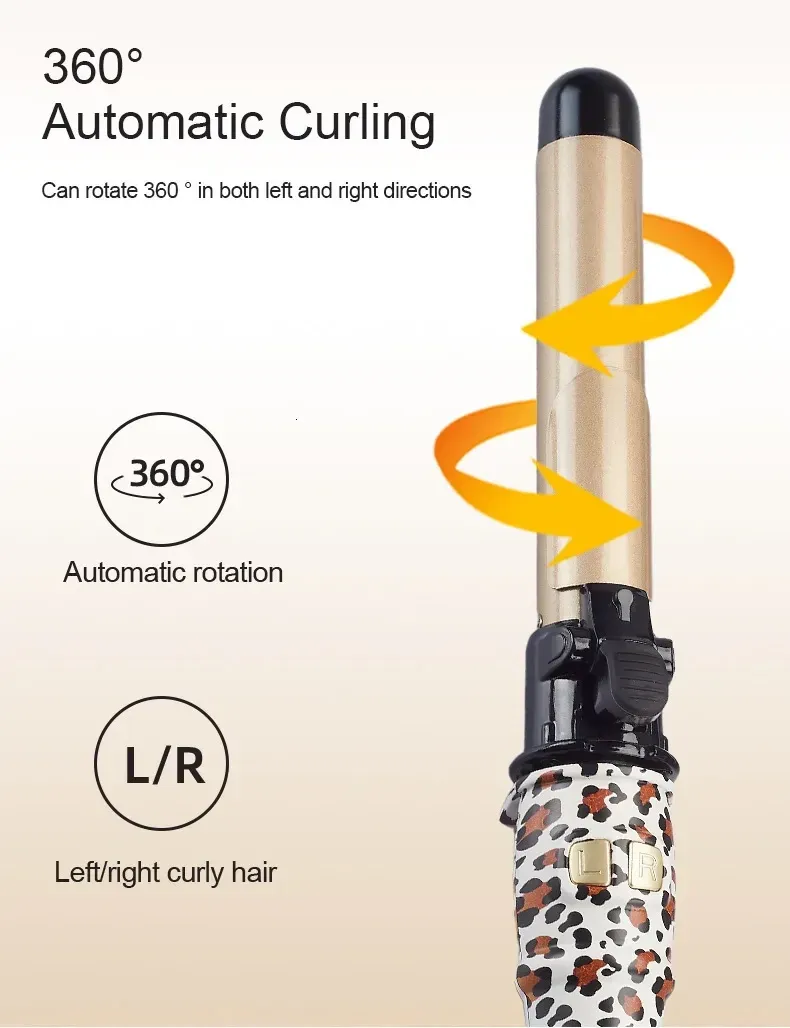
Is the extra spend on automatic worth it? If you're like me and styling your hair at 7:15am while half-asleep, absolutely yes. The Wavychic automatic rotating curling iron basically does the wrapping for you — you just feed the hair in and wait for the beep.
Automatic vs Manual Curlers: Which Is the Best Hair Curler Style for You?


Automatic curlers draw hair into a heated chamber and curl it without you needing to wrap or twist. Manual wands and tongs require technique. Both produce great results — the difference is convenience versus control.
Why Automatic Curlers Have Taken Off in 2026
I'm obsessed with how far auto-curlers have come. The early versions from a few years back? Genuinely terrifying. They'd snag hair, tangle it, sometimes just refuse to release. The newer generation — like the Wavychic 360° auto hair curler — uses bi-directional rotation and anti-tangle sensors. Massive improvement., meeting British quality expectations
My mate swears by her automatic curler, and I get why. She's got thick hair past her shoulders and used to spend 35-40 minutes curling with a manual wand. Now she's done in about 15 minutes. That's not nothing when you're trying to get out the door for work.
When Manual Wands Still Win
If you want very specific curl patterns — like tighter ringlets at the front and looser waves at the back — a manual wand gives you that control. You can vary the wrapping technique, adjust how much hair you use per section, and change direction mid-head. Automatic curlers produce more uniform results, which is either a pro or a con depending on what you're after.
For all you renters out there with limited bathroom storage (I see you, fellow Fallowfield flat-dwellers), a single versatile wand takes up less space than an automatic curler too. Just something to consider.
Matching the Best Hair Curler to Your Hair Type

Not every curling tool works for every hair type. Here's what I'd recommend based on texture and thickness — and what I've seen work on friends with very different hair to mine.
Fine Hair
You need lower temperatures (130-160°C max) and ceramic or tourmaline barrels. Titanium can be too aggressive. Look for tools with precise temperature control — jumping straight to 180°C on fine hair causes damage that's visible within weeks. A 25mm barrel gives fine hair enough body without the curl looking too tight or "done."
Medium Hair
Most curlers work well here. This is basically the sweet spot where you've got options. A 28-32mm barrel at 160-180°C does the job nicely. Ceramic or titanium both perform well. Automatic curlers are particularly effective on medium-textured hair because it feeds smoothly into the chamber without snagging.
Thick or Coarse Hair
Titanium barrel, 180-210°C, and patience. Thick hair needs more heat exposure time per section — about 10-12 seconds versus 6-8 for fine hair. Take smaller sections (roughly 2cm wide) even though it takes longer. Larger sections on thick hair just means the inner layers don't get enough heat and the curl drops within an hour.
Curly or Afro-Textured Hair
If you're redefining existing curls rather than creating them from straight, a wand with a tapered barrel (19-32mm) gives the most natural-looking results. Temperature needs vary hugely here — some afro-textured hair needs 200°C+ while other types respond well at 170°C. Always use a heat protectant rated for your chosen temperature. The Trading Standards guidelines require all heated styling tools sold in the UK to display maximum temperature clearly on packaging., popular across England
Frequently Asked Questions
How long should curls from a hair curler last?
Quality curling tools should produce curls lasting 6-12 hours on properly prepped hair. Titanium barrels typically give the longest-lasting results (8-12 hours), while ceramic averages 6-8 hours. Using a light-hold hairspray immediately after curling and allowing each curl to cool before touching it adds 2-3 hours of hold time.
What barrel size gives the most natural-looking waves?
A 28-32mm barrel produces the most natural, beachy waves on medium-length hair. For hair shorter than shoulder length, drop to 25mm. For very long hair past the mid-back, a 32-38mm barrel prevents curls looking too tight. The curl will loosen by approximately 15-20% once it cools and drops.
Are automatic hair curlers safe for beginners?
Modern automatic curlers (2025-2026 models) are significantly safer than earlier versions. They include anti-tangle mechanisms, automatic shut-off after 60 minutes, and directional controls. Beginners should start with 2cm hair sections and the lowest heat setting, increasing gradually. The risk of burns is actually lower than manual wands since the heated element is enclosed.
How often can I use a curling iron without damaging my hair?
Most hair professionals recommend limiting heat styling to 2-3 times per week maximum. Using temperatures below 180°C with a quality heat protectant (rated to your tool's temperature) reduces cumulative damage. If you curl more frequently, consider dropping your temperature by 10-15°C and using a weekly deep conditioning treatment to maintain hair integrity.
Is titanium or ceramic better for a hair curler?
Titanium heats faster (15-20 seconds vs 30-45 seconds for ceramic) and maintains temperature better during use, making it ideal for thick hair. Ceramic distributes heat more gently and evenly, suiting fine to medium hair. For most people with average hair thickness, ceramic offers the best balance of performance and hair protection at a lower price point.
Do I need to use heat protectant with a curling tool?
Yes, always. Heat protectant creates a barrier that reduces moisture loss by up to 50% during styling. Apply to damp hair before blow-drying, or to dry hair before curling — check the product label as formulations differ. Look for protectants rated to at least 210°C if you use higher temperatures. Skipping this step accelerates split ends and breakage noticeably within 4-6 weeks.
Key Takeaways
- The best hair curler matches your specific hair type — fine hair needs ceramic at 130-160°C, thick hair needs titanium at 180-210°C.
- Barrel diameter determines curl style: 25mm for tight curls, 28-32mm for natural waves, 35mm+ for loose, voluminous bends.
- Automatic curlers cut styling time by 50-60% compared to manual wands, with 2026 models offering genuine anti-tangle safety features.
- Temperature precision matters more than maximum heat — look for tools with 5°C adjustment increments rather than preset levels.
- Curl longevity depends on technique: smaller sections, proper cooling time, and light-hold spray add 2-4 hours of hold.
- Heat protectant isn't optional — it reduces moisture loss by up to 50% and prevents visible damage within weeks of regular styling.
- Budget doesn't have to mean compromise: quality curling tools from Wavychic start under £40 and outperform many premium-priced alternatives.
Ready to try Wavy Chic for yourself?
Get Your Glow — £46.20