Hair Curler for Fine Hair: A Careful UK Buyer's Guide
A good hair curler for fine hair gives you control at the lower end, a smooth contact surface and a release that does not pull fragile ends. Do not buy by maximum temperature or a blanket 'safe for fine hair' badge. If the appliance's lowest setting is still too aggressive for a hidden test section, choose a different tool or avoid heat.
Fine hair refers to strand diameter, not necessarily the amount of hair on the head. That is why a buyer can have plenty of hair yet still worry about rough ends, breakage and a clamp that drags. The right tool should make a controlled single pass possible; it should not require you to trade healthy-looking lengths for a curl that lasts.
Non-negotiables when choosing a hair curler for fine hair
A usable low starting point
Look for a labelled dial or display and check the actual minimum before buying. “Adjustable” is not enough if every setting is higher than your hair tolerates. The AAD recommends low or medium heat and a heat-protecting product, but it does not publish one universal Celsius guarantee for fine hair.
A smooth, intact contact surface
Ceramic and ceramic-coated barrels are common choices, but the material name is not a safety certificate. Inspect the surface and clamp edge. A chipped coating, rough join or overly strong clamp can catch fine ends even at a lower setting. Replace a damaged tool rather than pulling hair across it.
Controls you can use without extra passes
Buttons should be clear, the stand should keep the hot surface off furniture and the cord should not fight your wrist. A fast heat-up is convenient, but it does not reduce damage by itself. Reliable feedback and a deliberate section matter more than a race to the maximum.
Wand, tong or automatic rotation?
| Format | Possible advantage for fine hair | Trade-off |
|---|---|---|
| Manual wand | No clamp pressure; easy to leave delicate ends out | More hand skill and exposed hot surface |
| Clamp tong | Holds slippery sections in a repeatable position | Can crease or pull if the clamp is rough or tight |
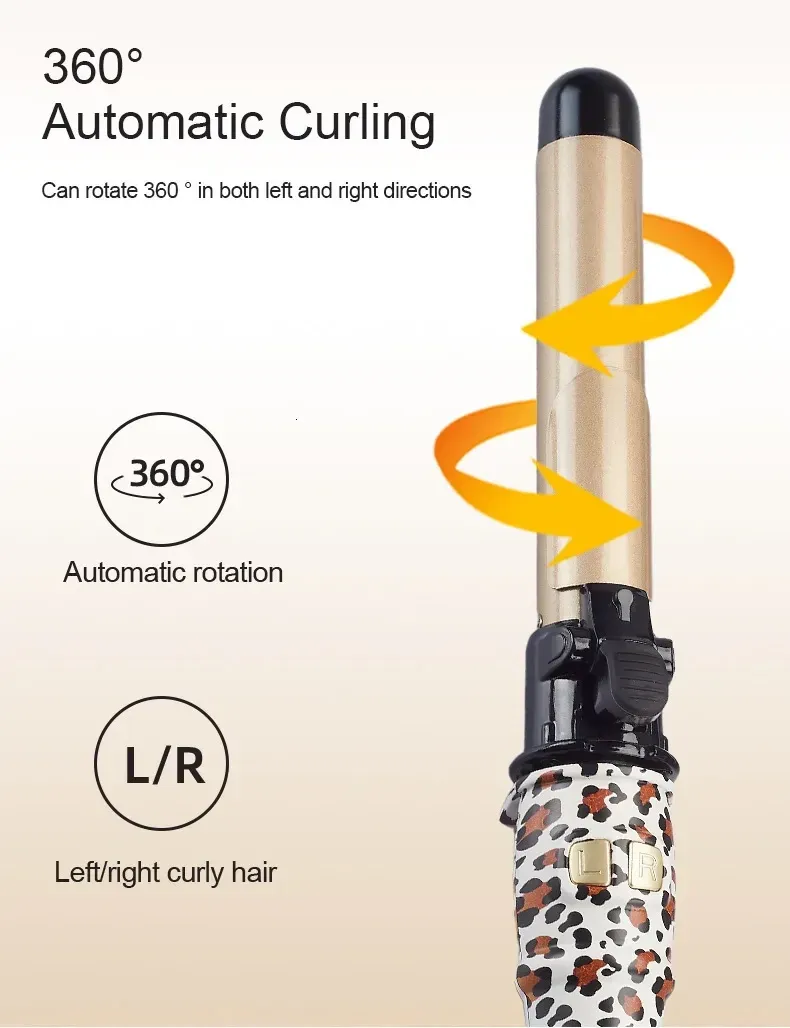
| Automatic rotating curler | Reduces repeated wrapping and can keep direction consistent | Fixed section capacity; release design must suit fragile ends |
Choose the format that removes your specific source of rework. If you repeatedly burn a finger with a wand, a clamp or guarded design may be easier. If clamps pull your ends, a smooth wand may be better. If twisting an old tool makes you rush, automatic rotation may help—but only after a low-setting release test.
Barrel size and the result you want
A smaller barrel generally starts with a tighter shape; a larger barrel starts looser. Hair length, section size and cooling change the final result, so a diameter alone cannot promise hold. Decide whether you want defined curls or soft waves, and check that the usable barrel area accommodates your length without overlap.
How to test a shortlist without overexposure
- Compare minimum settings, return terms, plug, surface condition and release mechanism before maximum heat.
- On fully dry, detangled hair, follow the instructions and start at the lowest setting.
- Use one hidden section, let it cool and inspect both hold and feel.
- Make the section smaller before increasing heat.
- Stop if the strand smells burnt, turns rough, snags or breaks.
For a detailed method, read our separate guide to curling iron temperature for fine hair. Keeping that procedure on one page prevents this buyer's guide from becoming another duplicate temperature chart.
Honest fit of the Wavy Chic option
The Wavy Chic automatic rotating curler has a 28mm tourmaline-ceramic barrel, LCD temperature control from 150–210°C, left/right rotation and an overload stop intended to let a section slide out. It costs £46.20 and has a BS1363 UK plug, 12-month warranty and 30-day returns on the live listing.
Those features answer control and ease-of-wrapping objections, but the 150°C minimum is not suitable for every bleached, damaged or unusually heat-sensitive head. Buy it only if the minimum and rotating capacity pass your own careful test. Otherwise choose a lower-starting tool or a non-heated styling method.
Safety and stop boundaries
DermNet identifies repeated heat and physical injury as causes of hair-shaft fragility. Existing breakage deserves less heat, not a stronger appliance. Electrical Safety First also advises using a UK plug, keeping the curler away from water, unplugging after use and cooling it on a heat-resistant surface.
Frequently Asked Questions
What is the most important control on a hair curler for fine hair?
A clearly labelled adjustable heat control with a suitably low starting point is more useful than a high maximum. It lets you search for the lowest effective setting, although no dial can guarantee that heat is harmless.
Is ceramic automatically safe for fine hair?
No. A smooth ceramic or ceramic-coated barrel may help with glide, but coating condition, temperature, contact time, sectioning and previous damage still matter. Stop using a tool if the surface chips or starts snagging.
Should fine hair use a wand, tong or automatic curler?
Choose by control and release. A wand avoids clamp pressure but exposes more hot surface; a tong holds slippery ends but can crease; an automatic curler reduces wrapping but has a fixed section capacity. None is universally best.
Can I keep turning up the heat if curls drop?
Not safely as a default. Let one test curl cool, reduce section size and remove heavy product first. If fragile hair becomes rough or breaks, stop and reassess rather than repeating hotter passes.
See the current Wavy Chic curler details
View the Curler — £46.20