Curling Iron Temperature for Fine Hair: A Safer UK Guide
There is no single curling-iron temperature that is safe or effective for every head of fine hair. Start at the tool's lowest setting, test one hidden section and increase only if the curl will not form. If hair smells scorched, feels rough or starts snapping, stop: more heat is not the answer.
Fine hair can mean each strand has a small diameter; it does not necessarily mean there are only a few strands. That distinction matters because a full head of fine hair may look dense while each strand still reacts quickly to heat. If an old tool has only an unlabelled high setting, or your ends already feel dry and fragile, the useful question is not “How hot can it go?” but “What is the least heat that works?”
How to find the lowest effective setting
- Begin with fully dry, detangled hair. Do not use an electrical curler near a sink or on wet hair unless its manufacturer explicitly says it is designed for that use.
- Read both labels. Follow the curler instructions and the heat-protectant label. A product marketed as protective does not make unlimited temperature or repeated passes harmless.
- Select the lowest available setting. On the current Wavy Chic model that is 150°C; another appliance may start lower. The number is a product setting, not a medical promise.
- Test a small hidden section once. Use a neat section that the barrel can heat evenly. Let it cool completely before deciding whether it held.
- Change one variable at a time. Make the section smaller before raising the heat. If an increase is needed, use one control step and test again rather than jumping to maximum.
This approach answers the real curling iron temperature for fine hair question without pretending that colour treatment, previous bleach, porosity and appliance calibration are identical for everyone. The American Academy of Dermatology (AAD) advises low or medium heat and a heat-protecting product, while its more detailed styling guidance warns that excessive heat can damage any hair type.
Why a hotter setting may not improve hold
When fine hair drops, temperature is only one possible cause. A section that is too broad can heat unevenly. Heavy oils may pull a curl down. Brushing while it is still warm removes the shape before it sets. Repeating the same pass can roughen already vulnerable ends. Work in clean, consistent sections and allow each curl to cool before loosening it.
If the lowest setting forms a curl but the result is too tight, alter the section or barrel choice rather than immediately increasing temperature. If it forms no curl, check that the hair is dry and the section is small enough. If the strand becomes rough without holding, stop. DermNet's hair-shaft guidance lists repeated heat and physical injury among causes of increased fragility.
Signs that the test has failed
- a burnt smell, visible scorching or smoke;
- new roughness, brittleness or snapping;
- the clamp or rotating mechanism repeatedly pulling fine ends;
- needing several hot passes on the same section;
- pain, scalp contact or a skin burn.
Those are stop signals, not prompts to try maximum heat. Existing breakage, recent bleaching or unexplained hair loss also warrants a conservative pause. A hairdresser can assess technique and condition; a clinician is the right person for a scalp disorder or unexpected loss.
Safety after the last curl
Electrical Safety First advises using a UK-plug appliance, keeping curlers away from water, unplugging them when not in use and letting them cool on a heat-resistant surface. A 60-minute automatic shut-off is a useful back-up on the Wavy Chic model, but it does not make an unattended hot tool safe.
Where tool choice fits
A clearly labelled adjustable control is more useful than a high maximum. A smooth barrel and mechanism that releases without tugging also matter when fine ends already feel vulnerable. For the buying decision rather than the test method, use our hair curler for fine hair guide.
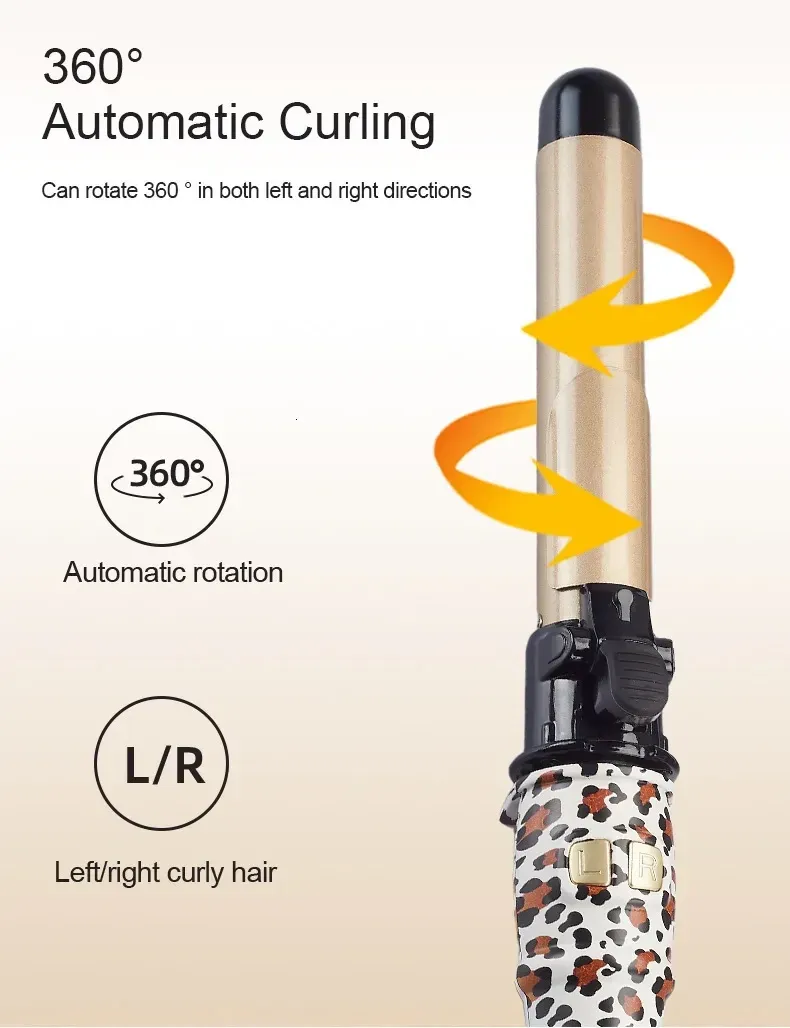
The Wavy Chic 28mm automatic curler has an LCD range of 150–210°C and costs £46.20. Its 150°C minimum may suit some healthy fine hair, but not every fragile or chemically treated head. If your own test says the minimum is still too hot, choose a lower-starting tool or avoid heated styling; do not force the product to fit.
Frequently Asked Questions
What curling iron temperature should fine hair start with?
Start with the appliance's lowest available setting and follow its instructions. Fine, bleached and already damaged hair can respond differently, so use one hidden test section rather than treating a generic temperature chart as a guarantee.
Is 150°C always safe for fine hair?
No. It is the lowest setting on some tools, including the current Wavy Chic curler, but it is not a universal safety threshold. If a test section feels rough, smells unusual or breaks, stop using heat and seek advice from a qualified hair professional or clinician as appropriate.
Why does my fine hair drop even when I turn the heat up?
Large sections, heavy product, touching the curl before it cools and existing damage can all weaken hold. Re-section first and let the curl cool; repeatedly increasing heat can add damage without fixing the actual cause.
When should I stop heat styling fine hair?
Stop if you see increased breakage, split ends, roughness or loss of elasticity, or if the tool snags. DermNet identifies repeated heat and physical injury as causes of hair-shaft fragility, so damaged lengths need recovery rather than another hot pass.
See the current Wavy Chic curler details
View the Curler — £46.20