Hair Curler for Thick Hair: A Practical UK Guide
A useful hair curler for thick hair should handle many sections without forcing repeated passes. Prioritise adjustable heat, enough working barrel length, a controllable grip or rotation and a clear release. Thick or dense hair does not automatically mean maximum temperature; start low and solve section size first.
“Thick hair” can describe wide individual strands, a high number of strands, or both. Check which problem you actually have. If an old manual wand leaves inner layers straight, makes you twist your wrist through a long whole-head routine and produces uneven waves, a new tool should improve capacity and control—not merely advertise a hotter maximum.
Four features that matter on a hair curler for thick hair
1. A genuinely adjustable control
Start at the lower end allowed by the manufacturer and test a cooled curl. If it fails, make the section smaller before adding heat. The AAD says excessive heat can damage every hair type and recommends low or medium settings with heat protection. Coarser strands may need a higher setting than fine strands, but condition still overrides a label such as “thick”.
2. Enough usable barrel space
Overlapping a long, dense section creates uneven contact. Look at the part of the barrel that actually accepts hair, not the total appliance length. A longer manual barrel can be useful for long hair; an automatic tool needs a rotating area that accepts a modest section without bunching.
3. Repeatable control without wrist strain
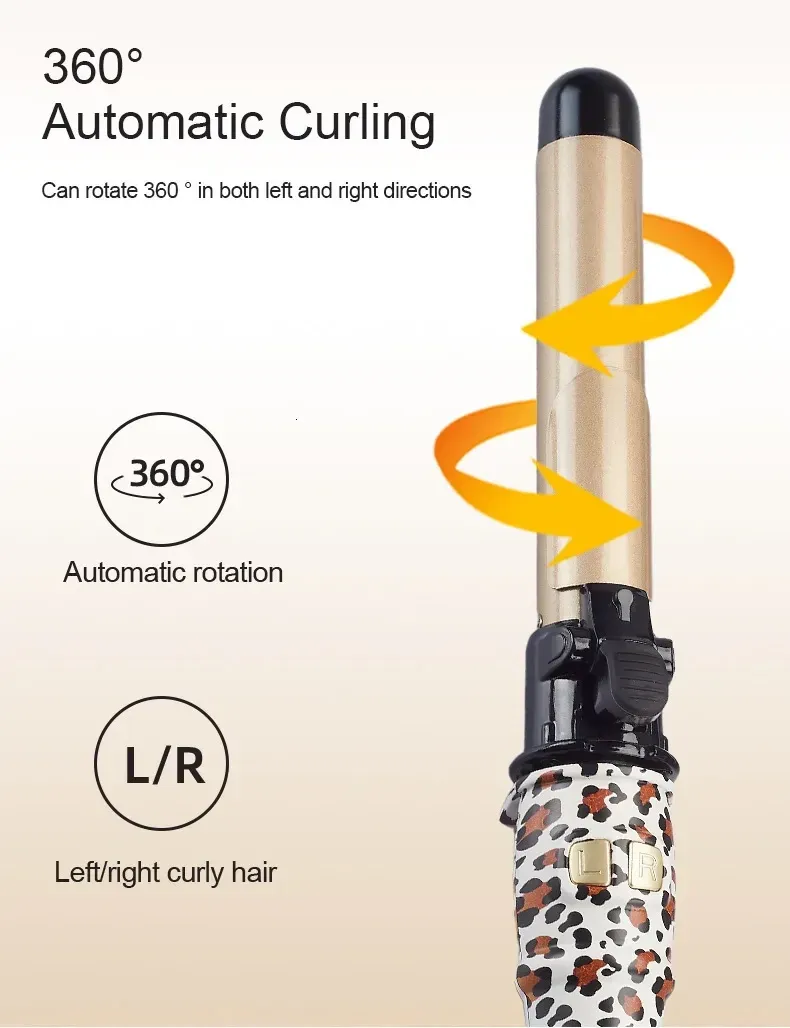
A clamp gives consistent tension but can crease if it grips too hard. A wand gives direct placement but asks you to wrap every section. Automatic rotation can reduce repeated wrist twisting, which may help an experienced user who is tired of a slow old wand, but it still requires deliberate sectioning and left/right control.
4. A predictable release
Before doing the back of the head, practise on a visible section at low heat. Hair should leave the clamp, barrel or rotating opening without snagging. Stop if a mechanism repeatedly catches: pulling through is not a valid styling technique.
Automatic versus manual for dense hair
| Choice | Useful when | Honest limitation |
|---|---|---|
| Automatic rotating barrel | Repeated wrist twisting is the main frustration and consistent direction is wanted | Each section must fit; it does not remove the need to divide dense hair |
| Clamp tong | Controlled tension and a polished curl are priorities | A rough or strong clamp can crease or pull |
| Manual wand | Long hair and varied curl placement need direct control | More hand skill and wrist movement; exposed hot surface |
A lower-rework routine for thick hair
- Dry and detangle fully, then divide the head into clear lower, middle and crown zones.
- Apply a heat protectant according to its label; do not assume it permits maximum heat.
- Begin with a section narrow enough to sit on the barrel without overlap.
- Use the lowest effective setting and one deliberate pass.
- Pin or hold the curl shape while it cools, then assess before changing a setting.
This takes planning, but it avoids the familiar cycle of rushing large sections, finding straight inner strands and reheating them. If the tool cannot accept a practical section or the full routine remains uncomfortably slow, the model is a poor fit even if it can reach 210°C.
How the Wavy Chic model fits this brief
The Wavy Chic automatic rotating curler has a 28mm tourmaline-ceramic barrel, left/right rotation and an LCD range of 150–210°C. It is £46.20 and includes a 2m swivel cord. Those are verified product attributes, not proof that it is right for every thick or very long head.
It is worth considering if automatic rotation addresses your tired wrist and you want repeatable soft waves. Choose a different format if your sections cannot sit without overlap, you prefer varied shapes, or the rotating mechanism slows you down. See the broader automatic hair curler UK guide for that workflow decision.
Heat and electrical boundaries
Hair that is bleached, brittle or breaking needs a lower-risk approach regardless of thickness. Follow the tool instructions and stop after a failed condition test rather than adding repeated passes. For appliance safety, Electrical Safety First says to use a UK plug, keep a curler away from water, unplug after use and cool it on a heat-resistant surface.
Frequently Asked Questions
Does thick hair always need the highest heat setting?
No. Strand diameter, density, colour treatment and existing damage all affect the result. Start at a lower setting, use smaller sections and increase only within the appliance instructions if a cooled test curl will not form.
Is an automatic hair curler suitable for thick hair?
It can be if each section fits the rotating area without crowding and the tool releases cleanly. Dense hair still needs systematic sectioning, and very long or bulky sections may be easier to control with a longer manual barrel.
What matters more than maximum temperature for dense hair?
Useful working length, stable controls, manageable weight and a section size the barrel can heat evenly often matter more. A maximum figure cannot compensate for overlapping hair or repeated passes.
When is a manual wand the better choice?
Choose a manual wand when you want direct control over tension, placement and curl shape, or when your hair is too long for an automatic rotating area. The trade-off is more wrist movement and a greater need for careful hand positioning.
See the current Wavy Chic curler details
View the Curler — £46.20